
The Ups And Downs Of The Kettle Switch‑ons At Christmas: Can The Grid Cope?
23rd December 2025
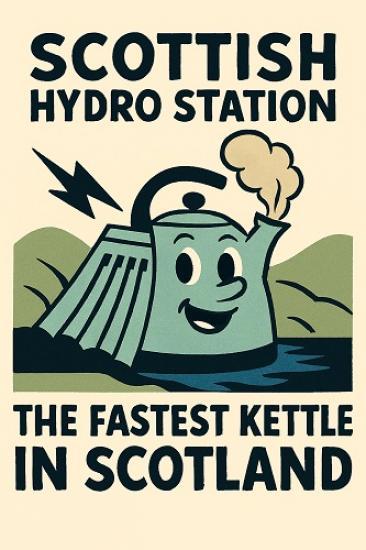
Every December, Britain's electricity grid braces itself for one of the quirkiest and most predictable surges in demand: the mass kettle switch‑on. It is a peculiarly British phenomenon, rooted in our love of tea and the rhythms of festive television.
When millions of households simultaneously put the kettle on after the King’s Speech or the climax of a Christmas special, the grid experiences a sudden spike in demand that rivals the output of a large power station.
The Christmas Surge
The "TV pick‑up" effect is well documented. As soon as a popular programme ends, viewers head to the kitchen to boil water. At Christmas, this behaviour is magnified. The result is a surge of hundreds of megawatts in just a few minutes. For grid operators, these moments are as predictable as they are dramatic. They know that when the credits roll, demand will leap.
How the Grid Responds
National Grid ESO has long prepared for these spikes. In the past, coal and gas stations were held in reserve to ramp up quickly. Today, the response is more diverse: pumped‑storage hydro plants like Dinorwig in Wales can unleash power within seconds, while interconnectors draw electricity from continental Europe. Increasingly, battery storage and demand‑side management play a role, smoothing out the bumps with lightning‑fast adjustments.
The grid’s resilience lies in its ability to anticipate. Operators track TV schedules, weather forecasts, and even social habits to predict when the kettle surge will strike. At Christmas, these forecasts are sharpened, ensuring that spare capacity is ready to flow.
A Historical Anecdote
The phenomenon first caught engineers’ attention in the 1970s, when Coronation Street cliff‑hangers sent millions of viewers rushing to the kitchen. The sudden surge was so sharp that grid operators began monitoring TV schedules as carefully as weather charts. By the 1980s, the “TV pick‑up” had become a recognised part of grid management, with Dinorwig hydro station nicknamed “the fastest kettle in Wales” for its ability to respond instantly to demand spikes.
This quirky link between soap operas and system stability shows how everyday habits can ripple through national infrastructure.
The Challenge of Change
Yet the festive kettle surge is not just a quaint curiosity. It highlights the broader challenge of balancing supply and demand in a system undergoing rapid transformation. With coal largely gone and renewables dominant, the grid must rely on flexible assets to cope with sudden swings. A million kettles switching on at once is a reminder that consumer behaviour can be as volatile as the wind or sun.
Can the Grid Cope?
The short answer is yes. Britain’s grid has coped with kettle surges for decades, and today’s mix of hydro, batteries, and interconnectors makes it more agile than ever. But the long answer is more nuanced. As electrification spreads—heat pumps, EVs, and smart appliances—the scale of demand spikes could grow. Managing them will require not just fast‑acting generation but smarter coordination of demand itself.
A Festive Reflection
The Christmas kettle surge is a symbol of national character: communal, predictable, and slightly eccentric. It is also a reminder of the invisible choreography that keeps the lights on. While families gather around the television and reach for the teapot, unseen engineers and algorithms are working to balance the system. The ups and downs of the kettle switch‑ons may be a seasonal quirk, but they tell a bigger story about how Britain’s grid adapts to the rhythms of everyday life.