
Britain Discovers Fertilizer: A Love Story in Three Acts
3rd July 2026
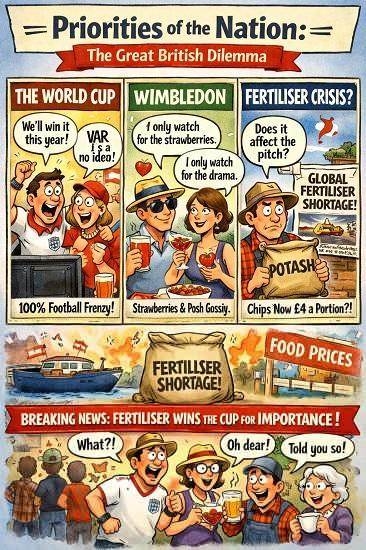
Before the Strait of Hormuz made the evening news, most of us thought potash was a new vegan spread and phosphates were something you rinsed off your dishes. Now, half the country is debating Moroccan mineral reserves like it’s the World Cup.
Act I: The Great Awakening
It started innocently enough.
A few headlines about “fertilizer shortages” appeared, and suddenly your uncle — who hasn’t gardened since the 1990s — was explaining the global phosphate market over Sunday roast.
“Morocco’s got seventy percent of the world’s reserves,” he said, waving a forkful of potatoes.
“Seventy percent!”
Nobody knew what that meant, but everyone nodded solemnly, as if he’d just quoted Shakespeare.
Act II: The Hormuz Panic
Then came the Strait of Hormuz.
A shipping delay there and Britain collectively lost its mind.
People who couldn’t find Iran on a map were suddenly geopolitical analysts.
“Of course, the Hormuz bottleneck affects nitrogen flow,” said one woman in Tesco, clutching a bag of crisps like it was gold bullion.
Her friend replied, “I told you we should’ve stocked up on compost.”
Act III: The Rise of the Armchair Agronomist
Now we’re all experts.
We talk about potash prices the way we used to talk about petrol.
We say things like, “I wouldn’t want to be a barley farmer right now,” even though we’ve never met one.
Social media is full of posts like:
“Just ran the numbers — if phosphate imports drop 10%, we’re looking at a 15% rise in chip prices.”
“Can confirm: my garden is basically an economic indicator.”
It’s chaos, but it’s educational chaos.
Meanwhile, in Westminster…
Politicians are promising “strategic fertilizer resilience,” which sounds impressive until you realise it means “we’re Googling Morocco too.”
The Moral of the Story
We may not have known what potash or phosphates were before Hormuz, but now we’re fluent — mostly because we’re terrified of paying £4 for a potato.
So here’s to Britain:
A nation that can turn any crisis into a crash course in obscure minerals.