
THE GREAT BELLY‑FAT BREAKFAST SCAM
17th July 2026
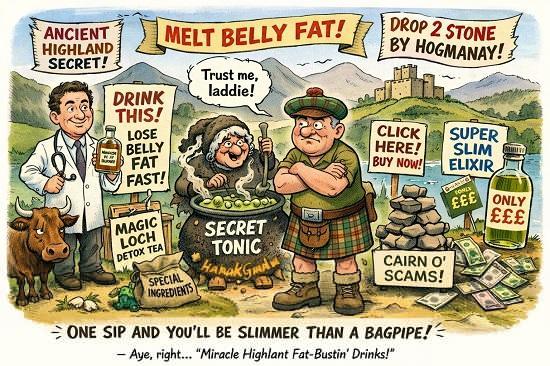
If you’ve been online lately, you’ve probably seen those ads shouting “Drink THIS every morning to melt belly fat!”.
They always feature a mysterious fruit, a glowing mug, and a doctor who looks suspiciously like a stock photo model named Kevin.
Let’s break down what’s really going on — and what actually works — with a bit of Sutherland humour.
How These Ads Try to Bamboozle You
The Secret Potion Trick
They claim there’s a magical drink “scientists are stunned by.”
If scientists were truly stunned, they’d publish a paper — not a pop‑up ad between cat videos.
The Ancient Wisdom Gambit
Apparently, every village in Japan, Peru, or the Himalayas has a grandmother who discovered a belly‑fat‑melting brew.
Oddly, none of these grandmothers ever appear in the ad.
The Fake Doctor Shuffle
White coat. Stethoscope. Serious expression.
No name. No credentials.
Probably Kevin again.
The “Click Before You Think” Strategy
They never tell you the drink.
They want you to click, watch a 45‑minute video, and eventually buy a supplement made of powdered disappointment.
The Fear Factor
“Belly fat is dangerous!”
Yes, excessive visceral fat matters — but not in the “drink this lemon potion or perish” way they imply.
The Evidence‑Based Reality (Sorry, No Magic)
No drink melts belly fat
None. Zero. Nada.
If such a drink existed, supermarkets would have an aisle called “Instant Abs.”
Fat loss is whole‑body, not targeted
You can’t choose where fat comes off.
If you could, every gym would have a “Belly Only Treadmill.”
What actually works (the boring truth)
Here’s the real, science‑backed stuff:
Calorie balance — eating slightly less than you burn
Regular movement — walking, cycling, lifting anything heavier than a kettle
Good sleep — your body burns fat better when it’s not exhausted
Cutting sugary drinks and alcohol — these do affect belly fat
Consistency — not heroic bursts followed by heroic naps
Some drinks help indirectly
Green tea, black coffee, or water before meals can reduce appetite.
But they don’t melt fat — they just stop you drinking things that add fat.
Why This Matters
Here in the north, we’re practical folk.
We know nonsense when we see it — especially when it promises miracles before breakfast.
Local businesses, community groups, and wellbeing projects benefit from clear, trustworthy information, not miracle‑drink marketing. When people avoid scams and focus on real habits, it supports:
healthier workplaces
stronger communities
fewer wasted pounds (both kinds)
better long‑term wellbeing
And frankly, we’ve got enough to deal with — fuel prices, food costs, and weather that changes its mind every ten minutes — without being told that salvation lies in a mug of lemon water.